- How it started
Hi, I'm Mohamed, a frontend developer from Morocco, currently studying Software Engineering in Türkiye.
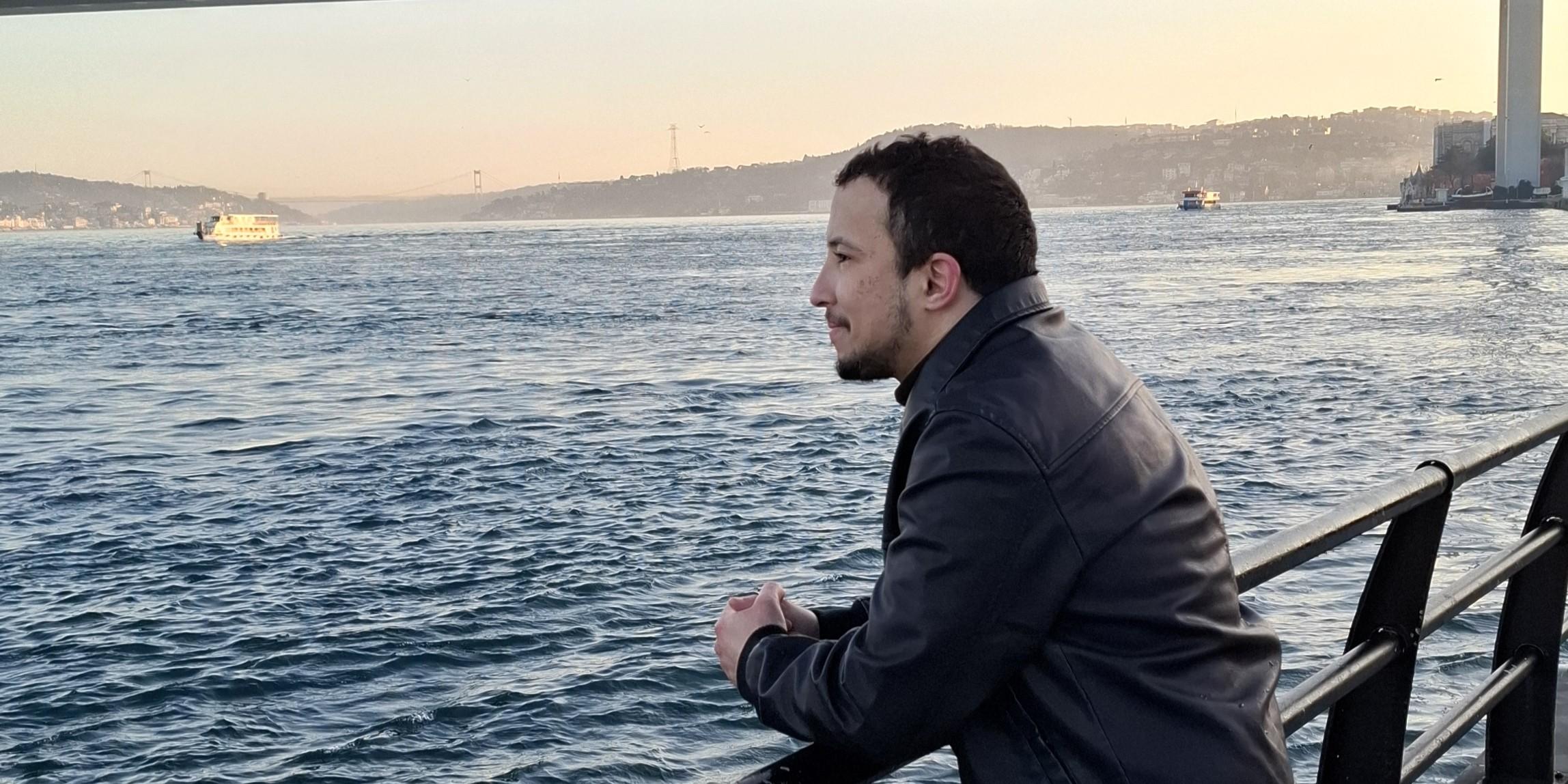
My relationship with computers started long before I knew what programming was. In 2011, my father brought home a computer. Back then, having one at home was rare where I lived, so I was fascinated. I wasn't interested in software yet; I just wanted to see what was inside. I would open it up, look at the parts, collect pieces I could find, and try to fix things that didn't work. I often had no idea what I was doing, but that never stopped me from trying again. For a long time, I was all about hardware.
- My first steps in programming
In Morocco, we didn't really have programming classes in school before high school. My first real chance to learn programming came in my first year of high school. We started with Scratch, an easy way to begin. Instead of writing lines of code, we used blocks to make things happen. I loved it. One small memory from that time still stands out to me.
One day, our teacher asked:
Does anyone know which language Android was built with?
I said:
Java.
I was probably the only one in class with an answer. I wasn't even sure, but I had seen 'Java' on my phone when it started up, so I guessed it was Java. She was happy, clapped, and said a few nice things. For a few minutes, I thought I was a genius.
Looking back, it was a small moment. But experiences like that made programming interesting for me. I started paying more attention to software, and before I finished high school, I knew I wanted to become a software engineer.
- Learning frontend
After high school, I started with frontend development. My first real lessons came from Elzero Web School, where I learned HTML, CSS, and JavaScript. HTML was okay, but CSS was tough. As a beginner, I struggled to make things look right. I'd change one thing, and something else would move unexpectedly. JavaScript was even harder.
But I was lucky to learn from someone who explained things well. Osama Elzero made difficult topics easy to understand, and the exercises and challenges pushed me to practice what I was learning rather than just watch the lessons.
I really want to say thank you here.
I don't want to forget the people who helped me start. His explanations made a big difference, and the exercises he gave us kept me practicing. Even now, I remember how much Osama Elzero ro helped me.
So, thank you.
- Getting my first client
After studying for a while, I wanted to find ways to use what I was learning. My first client found me through social media. He ran a business helping students with university applications, but his website was outdated and in need of work. At the same time, I needed help with my own university admission.
So we made a deal.
He agreed to help me with my university admission, and I worked on his website. That was my first client. It's not the kind of first-client story you read in business books, but it worked for both of us.
Since then, I've built all kinds of projects, especially e-commerce sites, landing pages, and dashboards. E-commerce caught my interest because I wanted to see how everything worked behind the scenes. I became curious about how the different parts connected and how products and data moved around. The more I worked on these projects, the more I wanted to learn about what happens beyond the frontend.
- Going to university
After about a year of learning frontend development and freelancing, I decided to go to university to study Software Engineering. It wasn't a hard decision. I had wanted to do this for a long time and learn it the right way. I'm still learning, of course.
- What I care about
One thing I care about more and more is maintainability. I don't want to build something that only makes sense to me. If another developer looks at the project later, I want them to understand it easily. I also think about the client. They shouldn't need a developer to change some content or update data. In frontend work, I want that kind of flexibility to be part of the experience.
If I can build a project so it's easy to use and hard to break, that's a win for me. Clean code isn't about looking clever. It's about making the project easy to understand, update, and work with, especially on the frontend.
- Building a community
While studying, I noticed that many students interested in development were learning on their own without really knowing others who shared the same interests. So I decided to create a development community myself; a place where students can connect, learn, and build together. It's still growing, but my goal is to eventually make it one of the biggest developer communities in Türkiye.
That's a big goal, I know. But I'd rather work toward it than decide it's too big.
- Life outside programming
I spend a lot of my time programming. I enjoy coding, solving problems on LeetCode, reading, writing, and learning new things. I also like learning languages, not programming languages this time 😅.
I'm a native speaker of Arabic and Berber, and I'm fluent in English. I'm currently learning Turkish and German.
Learning to communicate with computers wasn't enough for me. Now, I'm also trying to connect with more people.
- Where I'm going
Right now, I'm still learning what it means to become a really good software engineer.
Frontend is where I started, and it's still something I really enjoy, but I don't want to stop there. I want to keep growing as a frontend developer and also explore other areas. In the long run, I want to keep building the developer community I'm working on and make it one of the biggest in Türkiye. I also hope to continue my studies with a Master's degree and do research in Software Engineering.
I want to build something meaningful enough that people remember who made it. When we talk about software today, we remember the names of those who created important technologies, built systems that changed how we work, or solved tough problems. I want to leave something behind like that. I'm nowhere near there yet.
For now, I'm still the guy who's learning, building projects, solving problems, making mistakes, and taking things apart to see how they work.
And that's a good place to be.
If you made it to the end, thank you 🤝. I know this was a long read, and I appreciate you taking the time to get to know me.